
Meet MicroFireX at EV Charge Show · 26–28 November 2026 · Hall 1, Stand G8A
Products / MicroFireX®

Small device. Important job.
Protection for the places power lives.
FK5-1-12 reinforced S-type aerosol fire extinguisher.
A compact, automatic suppression unit for enclosed electrical spaces — from EV charging equipment to solar battery cabinets, caravans and boats.
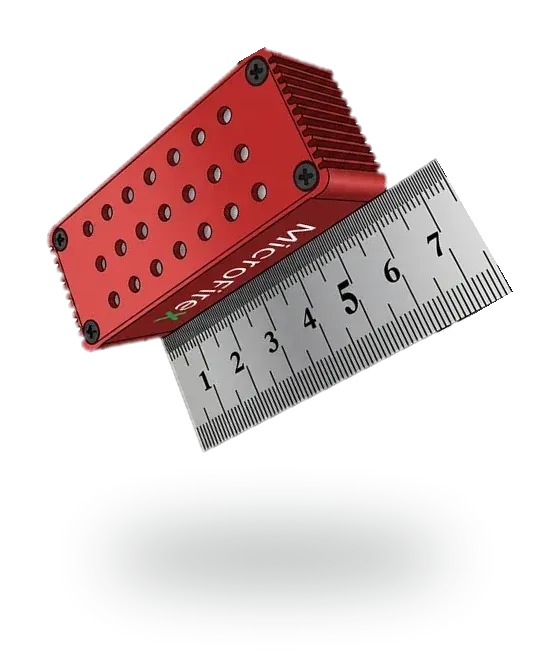
- thermal activation temperature
- 170°C
- fire suppression time
- 1–2 s
- compact module size
- 66 × 27 × 20 mm
- protected volume per unit
- 0.3 m³
Always on. No power needed. Ready around the clock.
One technology · Three applications
Built for enclosed spaces. Ready for real life.
One compact, heat-activated unit for the enclosures where electrical fires start — charging equipment, battery cabinets and mobile power systems.
01
EV charging equipment
Local protection for the enclosed electrical compartments inside charging equipment.
02
Solar & battery cabinets
Compact automatic suppression for inverter and battery enclosures in solar and storage systems.
03
Caravans & boats
A small-footprint unit for battery compartments in caravans, motorhomes and boats.
Also used in: Vehicle engine bays · Electrical panels & fuse boxes · Server racks & IT cabinets
There when you need it. Quietly.
MicroFireX activates automatically at 170°C and suppresses the fire in 1–2 seconds. It needs no external power, wiring or manual trigger, so it stays ready inside the enclosure around the clock.
Compact form
66 × 27 × 20 mm — made for confined enclosures.
Thermal activation
Activates at 170°C and suppresses the fire in 1–2 seconds.
Installer-friendly
Adhesive backing; no wiring, power supply or manual trigger.
How does MicroFireX differ from S- and K-type aerosols?
The defining feature of S-type (third-generation) aerosol, compared with conventional suppression systems and the earlier K-type aerosols, is its use of strontium nitrate (Sr(NO₃)₂) as the primary oxidiser. MicroFireX goes a step further: the S-type aerosol is reinforced with FK5-1-12.
The by-products released after suppression are stable, have low water solubility and are non-conductive and non-corrosive, which makes MicroFireX well suited to electrical enclosures and sensitive electronic equipment.
Chemical interruption
Nano-sized strontium and potassium particles released into the air bind, at a molecular level, to the free radicals (H•, OH•, O•) that sustain combustion, chemically breaking the fire’s chain reaction.
Physical cooling
An endothermic (heat-absorbing) reaction rapidly draws heat from the flame and cools the surrounding space.
FK5-1-12 reinforcement
As it vaporises, FK5-1-12 draws heat from the flame and suppresses the combustion reaction, adding an electronics-safe layer of suppression.
Lithium battery applications
A clear starting point for battery sizing.
For lithium battery applications, MicroFireX recommends 40 g (2 units) per 17 kWh of battery capacity, based on in-house factory testing. With a design density of 60 g/m³, the 40-gram module stopped thermal-runaway fires in an enclosed lithium-ion battery pack at their earliest stage in those tests.
1-second discharge
Reacts within 1 second — before the fire can spread to adjacent cells or escalate into flashover.
Molecular-level suppression
Nano-sized strontium particles break the chemical chain reaction feeding the fire, without relying on oxygen depletion.
Pressure-free and maintenance-free
The compact module integrates directly into the battery enclosure, with no piping or pressurised cylinders.
From product to real installation.
Short demonstrations of MicroFireX inside real enclosures — from a cabinet fire to a 17 kWh lithium battery pack.
Documents & transparency
Confidence starts with clear evidence.
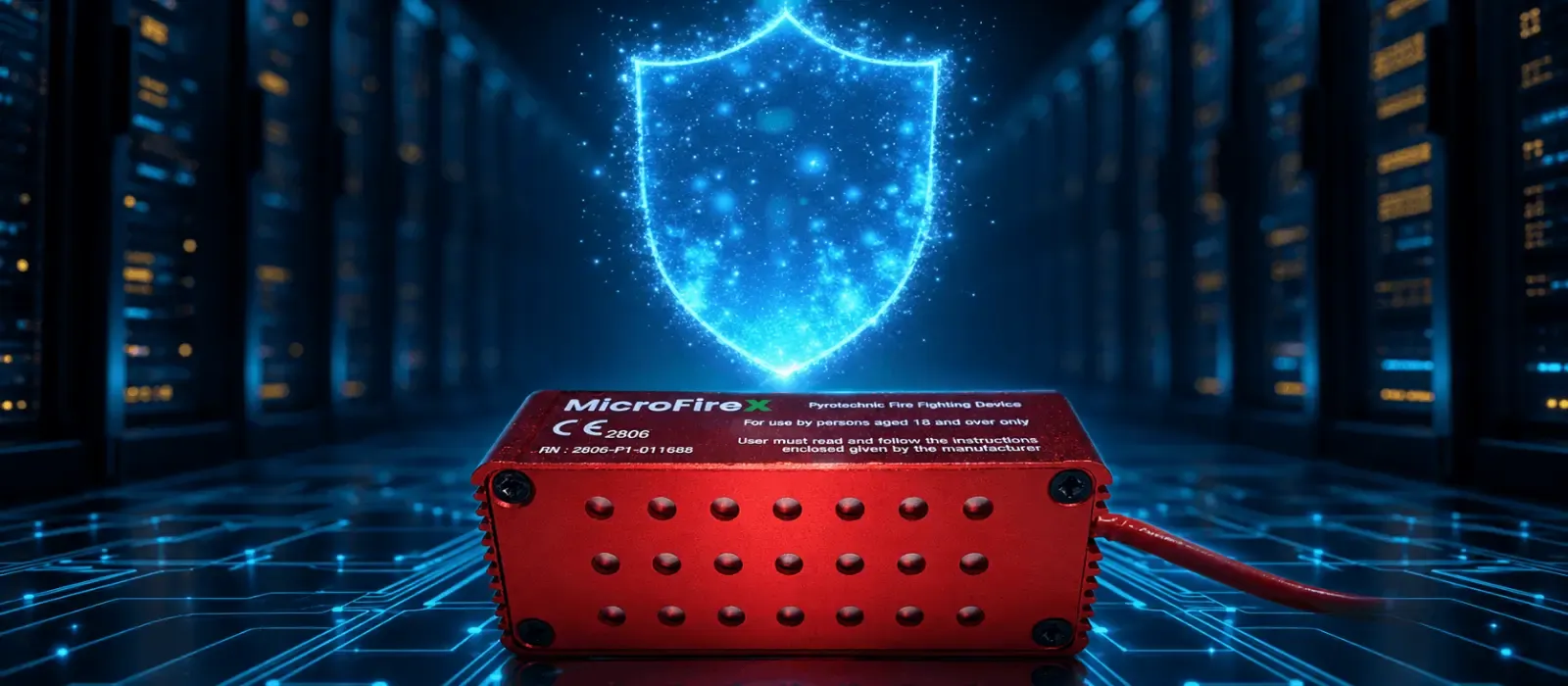
MicroFireX is certified under EU Directive 2013/29/EU by an EU notified body (Modules B + C) — EU registration no. 2806-P1-011688. Open each document to review its scope.
Frequently asked questions
Do I need automatic suppression in an enclosure that is rarely opened?+
Electrical fires start in seconds, often where nobody is watching. MicroFireX sits inside the enclosure and activates on its own at 170°C, so a small incident is stopped before it spreads.
How many units does a lithium battery pack need?+
As a starting point, 40 g (2 units) per 17 kWh of battery capacity, based on in-house factory testing with a design density of 60 g/m³. Discuss your enclosure with us for a specific recommendation.
Who certifies Modules B and C?+
EU-authorised notified bodies. Certified products display both the CE marking and the notified body’s registration number.
Partner with us
Bring a smarter protection layer to your market.
We are looking for distributors who work with EV charging, solar and energy storage, caravan or marine equipment. Tell us your country, company, sales channel and the applications you serve; we reply within 24 hours with product and partnership information.